
OneClick Travel Tech is a leading travel technology company specializing in custom travel booking solutions, offering services like B2B and B2C travel portal development, white label solutions and mobile app development to enhance customer experiences.
© ONECLICK TRAVEL TECH. ALL RIGHTS RESERVED.


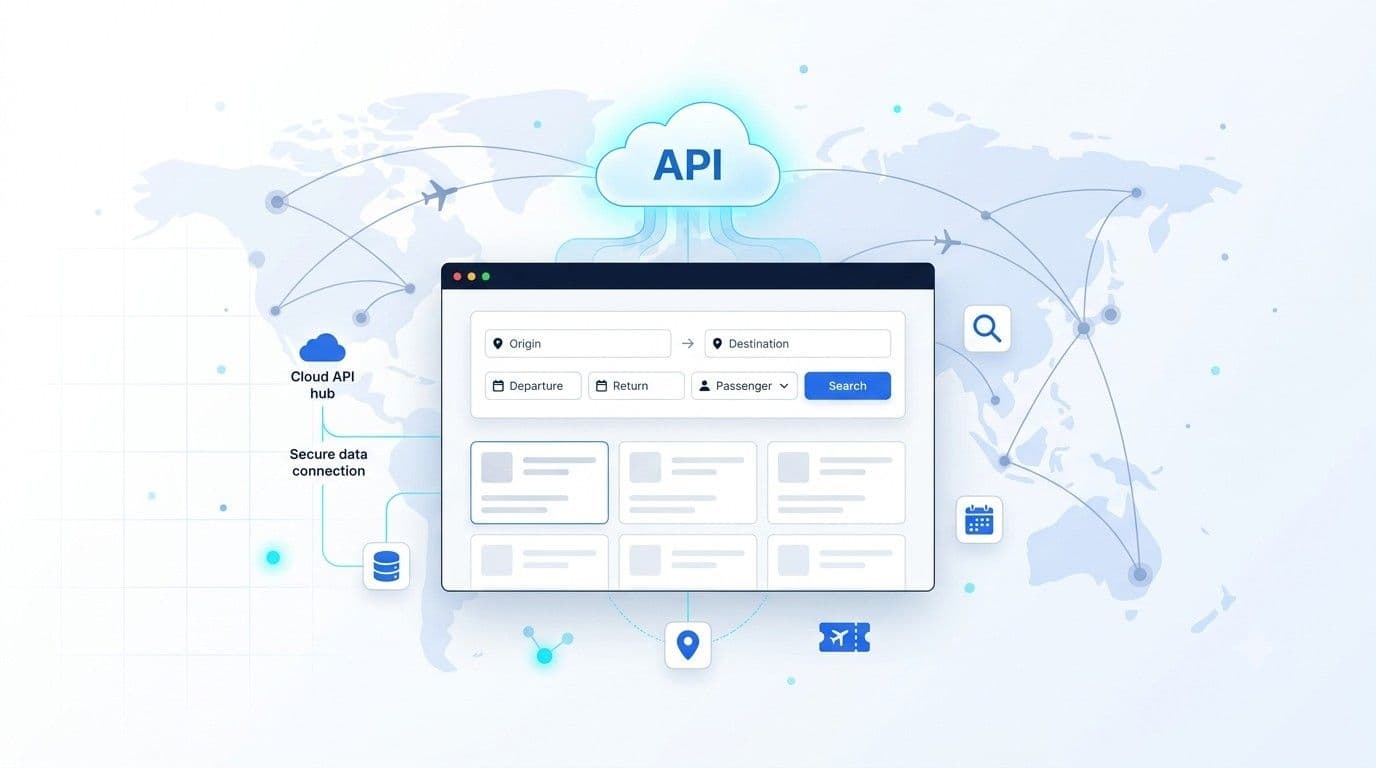
A one-time GDS choice that used to be simple just got more complicated: Amadeus is shutting down the self-service access most new OTAs relied on, pushing everyone toward Enterprise or Quick Connect instead. This guide breaks down how the Amadeus flight search API actually works, what that access change means for your build, what it costs, and when Amadeus makes more sense than Sabre or Travelport, backed by a real 14-week integration case study with documented booking and cost results.
Every OTA evaluating flight technology right now runs into the same question: is the Amadeus API still the safest long term bet, especially with the access model most new platforms started on being phased out this year? The Amadeus flight search API lets a travel platform pull real time flight schedules, fares, and seat availability from hundreds of airlines through one connection, instead of negotiating with each airline directly. That part hasn't changed. What has changed is how you get access to it, and that shift is worth understanding before committing engineering time to a build.
We've spent over ten years working as a flight booking technology provider, with more than 700 projects deployed across GDS integrations, booking engines, and custom travel portals out of our teams in Ahmedabad and London. In one recent Amadeus Quick Connect build, a mid-sized OTA moved from a manual booking process capped around 130 bookings a month to over 1,200 confirmed bookings by month six, while cutting weekly admin time by roughly 74 percent. That result is what a properly scoped Amadeus travel API integration can actually deliver, and it's part of why the current access changes at Amadeus matter to anyone planning a similar build.
Amadeus, one of the three major Global Distribution Systems alongside Sabre and Travelport, was founded in 1987 by Air France, Iberia, Lufthansa, and SAS. It has grown into the largest GDS by transaction volume, connecting over 400 airlines across 190 countries. The Amadeus flight API specifically handles search: a user enters a route and dates, the Amadeus travel API queries live inventory, and returns available flights with current pricing in seconds.
Behind that loop sits a three step booking flow. Search returns available options. Price re-confirms the fare and availability right before booking, since inventory and pricing shift constantly. Book finalizes the order against a Passenger Service System, or PSS, the underlying reservation system that actually issues and manages the ticket record.
Amadeus API integration for a booking platform means connecting your search, price, and book calls to this flow directly, rather than relying on cached or delayed data. Done properly, this is a fairly contained technical build. Done with shortcuts, particularly skipping the price confirmation step to save latency, it's how platforms end up quoting fares that are no longer valid by the time a customer clicks book. For platforms that want a narrower entry point into this without a full GDS build, a flight API integration solution built around Amadeus Quick Connect covers the search and pricing layer specifically, which is often enough for smaller platforms getting started.
One connection through Amadeus gives you access to hundreds of airlines, one set of credentials, one documentation set, and one support relationship. The tradeoff is per-transaction GDS fees and some dependency on Amadeus's own release schedule for new features.
Connecting directly to an airline, typically a low cost carrier with thin GDS representation, avoids GDS fees and sometimes surfaces exclusive fares. The tradeoff is real: every airline runs its own API with its own quirks, so a platform working with several direct carriers ends up maintaining several completely separate integrations rather than one.
One line takeaway: Amadeus wins on coverage and long term maintenance simplicity, direct airline APIs win on cost for specific low cost carriers, and most serious OTAs eventually run both side by side.
This is the part every serious buyer should understand before choosing a path, because the ground has shifted recently. Amadeus confirmed it is decommissioning its self-service developer portal entirely. Travel technology press reporting on the announcement noted that new registrations were paused starting in March 2026, with existing self-service API keys set to be disabled in mid-July 2026. The Enterprise portal and Enterprise APIs are unaffected, and Amadeus has directed self-service users toward migrating through their account manager.
That matters for reliability in a direct way. Any platform still building on self-service access needs an Enterprise or Quick Connect migration plan now, not later, since that access path is closing regardless of how far along a build is. It also means the old advice of starting cheap on self-service and upgrading later no longer applies cleanly. Enterprise, with its IATA or ARC accreditation requirement, is becoming the durable long term path, while Quick Connect remains a lighter self-service style option for newer, smaller platforms.
There's a cost and trust angle here too. Enterprise integrations require a certification process, typically weeks rather than days, where Amadeus checks how your platform handles standard booking scenarios before going live. That certification step exists specifically to protect fare accuracy and booking reliability at scale, which is exactly the kind of thing our parent company, OneClick IT Solution, accounts for when scoping a project timeline across its broader travel technology services, rather than treating certification as an afterthought.
Our Amadeus Quick Connect booking engine case study documents this directly. A mid-sized OTA running manual fare checks across multiple airline portals, with no live GDS inventory access, engaged OneClick to build a fully branded booking engine on Amadeus Quick Connect. The build ran in four phases over fourteen weeks: API certification and sandbox setup, a Node.js and React.js flight search and pricing layer with proper offer caching and price re-validation, a full booking flow with PNR generation through Flight Create Orders, and an agent admin panel before a phased production launch.
The published results: confirmed monthly bookings grew from a manual baseline of roughly 130 to over 1,200 by month six, weekly admin time dropped from 18 to 22 hours down to around 5 to 6 hours, and total build cost came in significantly lower than a comparable Enterprise or Travelport implementation would have required at that volume. It's a useful reference point for what a Quick Connect based flight search API integration can realistically deliver on a founder-scale budget, rather than a testimonial claim without documentation behind it.
Choose Amadeus if:
Consider Sabre or Travelport instead if:
Most platforms don't make this decision in isolation. They weigh it against how their booking engine and PSS already handle multi-source content, since a GDS choice only matters as much as the system built around it. A booking engine that can normalize fare and availability data across Amadeus, a secondary GDS, and a handful of direct airline connections gives a platform room to add or drop suppliers later without a rebuild. That flexibility tends to matter more over a platform's lifetime than the initial GDS choice itself, since airline distribution relationships shift and NDC adoption keeps expanding which content sits where.
For agencies and OTAs still running fragmented systems across separate supplier logins, the practical starting point is usually consolidating flight search, pricing, and booking into one workflow before adding NDC content on top, rather than trying to solve both problems at once.
1) What is the Amadeus Flight Search API used for?
It lets a travel platform query real time flight schedules, fares, and seat availability across hundreds of connected airlines through one integration, instead of connecting to each airline separately. It's typically the foundation of a larger flight booking engine.
2) Is Amadeus shutting down its self-service API?
Yes. Amadeus is decommissioning its self-service developer portal, with new registrations paused since March 2026 and existing self-service API keys disabled in mid-July 2026. Enterprise access and Quick Connect are unaffected and remain the primary paths into the platform.
3) How much does Amadeus API integration cost?
Cost depends on the tier. Quick Connect keeps early costs closer to development time plus pay-as-you-go API fees, while Enterprise involves a negotiated commercial agreement scaling with booking volume and the specific modules activated.
4) What is the difference between Amadeus Self-Service and Enterprise API?
Self-Service was REST based with no accreditation requirement, built for startups testing quickly. Enterprise requires IATA or ARC accreditation and a formal agreement, offering broader content in exchange, and is now the primary durable access path following the self-service shutdown.
5) How long does Amadeus API integration take?
A Quick Connect build for a full search, pricing, and booking flow has run around fourteen weeks in projects we've delivered. Enterprise integrations typically take longer due to the certification process required before going live.
Can the Amadeus API be used for NDC content?
Yes. Amadeus has invested in NDC support alongside its traditional GDS content, letting Enterprise platforms access airline direct fares and ancillaries through the same broader Amadeus relationship rather than a separate NDC-only build.
For more on how flight search technology and GDS access are evolving, our flight API blog covers related topics in more depth.