
OneClick Travel Tech is a leading travel technology company specializing in custom travel booking solutions, offering services like B2B and B2C travel portal development, white label solutions and mobile app development to enhance customer experiences.
© ONECLICK TRAVEL TECH. ALL RIGHTS RESERVED.


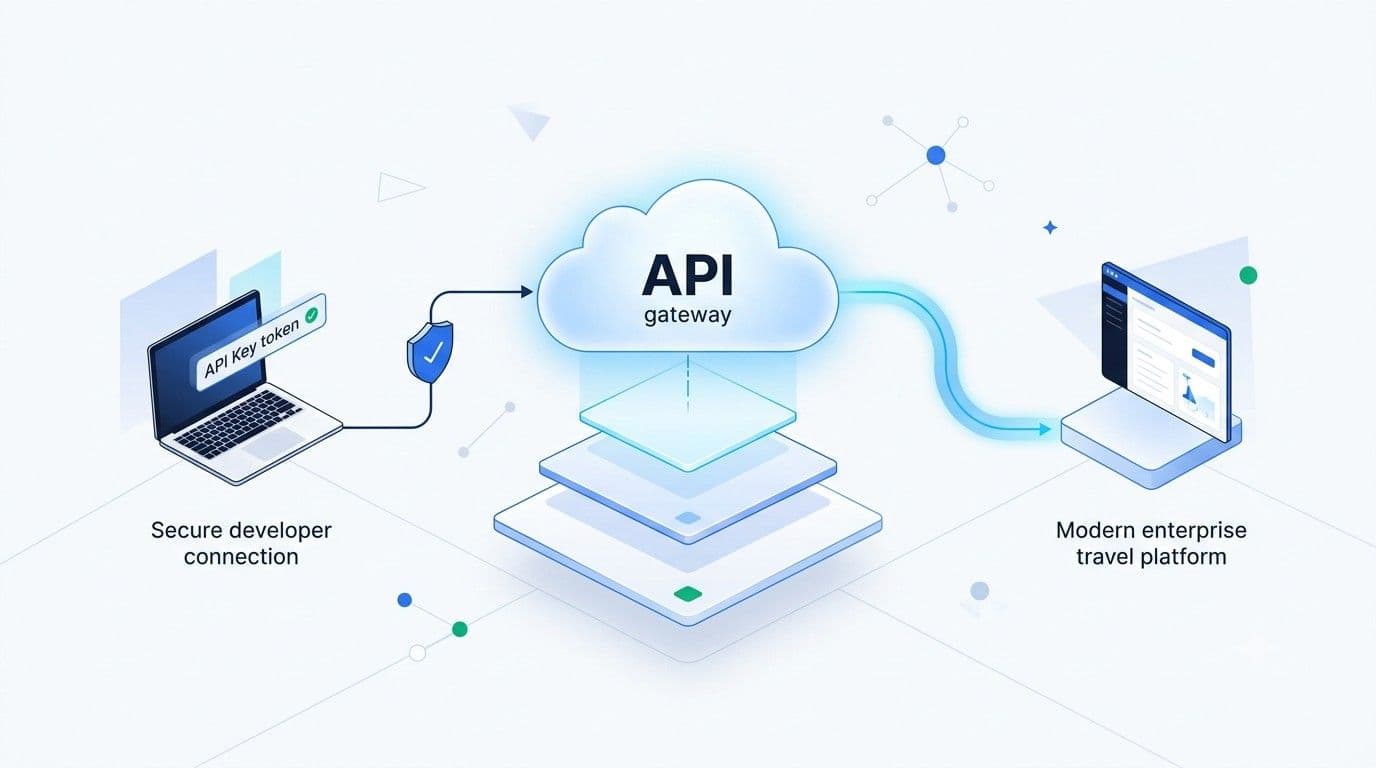
Amadeus API pricing depends less on a published rate card and more on which access tier your business qualifies for, and that access landscape changed significantly in 2026.
Amadeus does not publish a single price list for its flight API catalog, because cost depends on access tier, call volume, and which specific endpoints a business integrates. In one Amadeus Quick Connect build we completed for an OTA client, total build cost came in significantly lower than a comparable Enterprise or Travelport implementation would have required at that same booking volume, which is a useful real world data point when budgeting an Amadeus travel API project rather than relying on a rough industry estimate.
Historically, Amadeus's self-service tier charged a small per-call fee once a business exceeded its free monthly quota, often in the range of a fraction of a euro cent up to a few euro cents per call depending on the endpoint. That tier mattered because it let smaller businesses test an Amadeus flight API integration cheaply before committing to a larger agreement. With self-service being phased out, that low-cost entry point no longer exists in the same form, which is exactly why understanding today's access tiers matters more than memorizing a historical price sheet.
Enterprise access involves a negotiated commercial agreement rather than a published rate. Pricing typically scales with booking volume and the specific API modules activated, and for direct ticketing it requires IATA or ARC accreditation. This tier suits established OTAs and travel management companies with predictable, higher volume booking activity where a custom agreement makes financial sense.
Quick Connect offers a lighter commercial path into the same underlying flight search, pricing, and booking functionality, without the full Enterprise accreditation requirement. Costs tend to be more predictable for smaller and mid-sized platforms, since the onboarding process is shorter and the agreement structure is less complex to negotiate.
One line takeaway: Enterprise pricing rewards scale and predictable high volume, Quick Connect pricing rewards speed and simplicity for businesses that aren't ready for a full Enterprise negotiation yet.
Getting priced correctly starts with getting access correctly. A working Amadeus API integration begins with a formal application through Amadeus, followed by a certification process where Amadeus reviews how your platform handles standard booking scenarios before granting production access. This certification step exists specifically to protect fare accuracy at scale, and it's also where a meaningful share of unplanned cost and delay tends to show up, since certification revisions can add weeks if a submission doesn't meet Amadeus's requirements the first time.
Once certified, your platform calls the Amadeus flight search API, Flight Offers Search, for available flights, Flight Offers Price to re-validate a fare before checkout, and Flight Create Orders to finalize the booking against a Passenger Service System, or PSS. Each of those calls factors into your ongoing usage costs under either tier, so a platform with a high search to booking ratio, meaning lots of browsing relative to actual purchases, will see a different cost profile than one where most searches convert.
Amadeus's own access and per-call fees are only part of the total cost picture. Development time to build the search, pricing, and booking flow correctly is typically the larger line item, particularly if your team is handling GDS integration for the first time. A flight API integration solution built specifically around Amadeus Quick Connect can reduce this development cost meaningfully, since it covers the search, pricing, and booking sequence as a connected system rather than three separate builds each requiring their own testing and debugging cycle.
Other costs to budget for include ongoing maintenance as Amadeus updates its API versions, monitoring to catch fare mismatches before they reach customers, and, for Enterprise access specifically, the accreditation and legal review involved in a formal commercial agreement. None of these show up on a simple per-call pricing sheet, but they consistently affect the real total cost of an Amadeus flight API project.
Currency and regional pricing add another layer worth planning for early. A platform selling in multiple currencies needs to account for how Amadeus returns fares, typically in the currency associated with the point of sale configured for your account, which means multi-market platforms sometimes need a currency conversion layer sitting between the raw API response and what's shown to the customer. Getting this wrong doesn't just create a display bug, it can create a real mismatch between the fare a customer sees and the fare that actually gets charged at booking, which circles back to the same price re-validation discipline that matters throughout an Amadeus API integration.
The single biggest risk right now is planning a budget around outdated assumptions about self-service access. Amadeus confirmed it is decommissioning its self-service developer portal, with existing self-service API keys disabled in mid-2026. Any business still budgeting around self-service's low per-call rates needs to re-scope that plan around Enterprise or Quick Connect pricing instead, since the access path those older estimates assumed no longer exists for new integrations.
A second risk is underestimating certification timelines and treating them as a fixed cost rather than a variable one. Certification delays translate directly into delayed revenue, which is a real cost even though it doesn't appear as a line item on an invoice. As a flight booking technology provider that has guided multiple clients through this exact budgeting process, our parent company, OneClick IT Solution, scopes both the Amadeus fee structure and the certification timeline together before committing to a launch date, since treating them separately is a common reason projects miss their original budget.
Our Amadeus Quick Connect booking engine case study documents a direct example of this cost comparison in practice. An OTA running manual fare checks across multiple airline portals, with no live GDS inventory access, engaged OneClick to build a fully branded booking engine on Amadeus Quick Connect rather than a full Enterprise agreement. The build ran across four phases over fourteen weeks: API certification and sandbox setup, a search and pricing layer with proper offer caching and price re-validation, a full booking flow with PNR generation through Flight Create Orders, and an agent admin panel ahead of a phased production launch.
Total build cost came in significantly lower than a comparable Enterprise or Travelport implementation would have required at that same booking volume, while confirmed monthly bookings still grew from a manual baseline of roughly 130 to over 1,200 by month six. That result is a reasonable reference point for what a Quick Connect based Amadeus API integration can cost relative to a full Enterprise path, for a business at a similar scale.
Choose Enterprise access if:
Choose Quick Connect if:
Most businesses that start on Quick Connect revisit this decision once booking volume grows to a point where an Enterprise agreement's economics become more favorable, so the choice isn't necessarily permanent. For a broader comparison of GDS providers and their access models, our flight API blog covers related pricing topics in more depth.
Access tier is the biggest factor, since Enterprise and Quick Connect follow different commercial structures. Beyond that, call volume, which specific endpoints you integrate, and whether you need direct ticketing accreditation all influence the total cost more than any single published rate.
Yes, particularly through Quick Connect, which was built for smaller platforms that don't yet have the booking volume to justify a full Enterprise negotiation. The bigger cost driver for a small agency is usually development time, not Amadeus's own access fees.
Amadeus's self-service tier, which included a free sandbox and a limited free monthly quota, is being decommissioned, with existing keys disabled in mid-2026. There is no equivalent free production tier under Enterprise or Quick Connect.
Not hidden exactly, but easy to underestimate. Certification delays, ongoing API version maintenance, and monitoring for fare mismatches all add real cost beyond Amadeus's own per-call or negotiated fees, and none of them show up on a simple pricing sheet.
Access starts with a formal application through Amadeus, followed by a certification process where Amadeus reviews how your platform handles standard booking scenarios before granting production access. The process and timeline differ slightly between Enterprise and Quick Connect.
Amadeus doesn't publish region specific rate cards, but fares are typically returned in the currency tied to your account's point of sale, so multi market platforms should plan for currency handling as part of their cost and technical scope, not just API usage fees.